If your company is starting to use AI tools or train models, you may notice that the servers get hotter and use more electricity than usual. Ordinary racks that worked fine for regular websites or databases suddenly feel tight.
That is why many data centers are moving toward high-density racks. These racks can handle more power and cooling in the same space, which is exactly what AI workloads need.
What Makes AI Different from Ordinary Workloads
Regular servers mostly wait for requests and reply. AI servers, especially those with GPUs, keep calculating all the time. One GPU card can use as much power as several ordinary servers combined.
When you put several of them in one rack, the heat rises quickly. The power draw also jumps. A standard rack that is designed for 5–8 kW may not be enough anymore. High-density racks are built to support 15 kW, 20 kW, or even higher per rack.
Without enough cooling, the servers throttle themselves or shut down to protect the hardware. That means the AI job stops in the middle, which is frustrating for the team.
How High-Density Designs Help
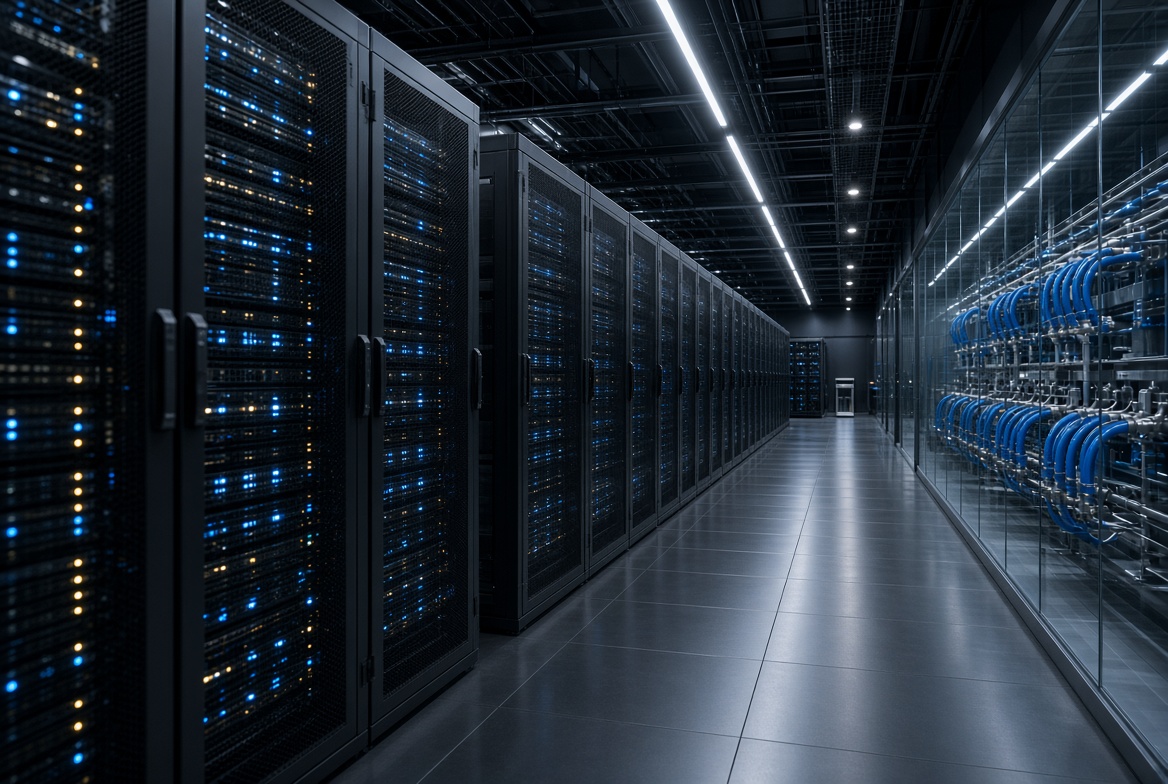
High-density racks usually come with better airflow management. Cold air is guided properly to the front of the servers, and hot air is removed quickly from the back. Some facilities use contained aisles so the cold and hot air do not mix.
Power delivery is also stronger. There are more circuits and higher-capacity PDUs so the rack does not trip when the GPUs ramp up.
The result is more predictable performance. The AI workload can run longer without sudden slowdowns caused by heat or power limits.
Why Location and Facility Quality Still Matter
Even with high-density racks, the overall facility must support them. The cooling plant, the electrical system, and the redundancy all need to be ready for higher loads.
Facilities that already hold Tier IV certification and sit close to major internet exchanges in Jakarta tend to make stable connectivity easier to maintain while handling these denser loads.
When your workloads start moving toward AI or need higher power density per rack, a data center built for that load is simply more comfortable to run.
Many teams also prefer colocation that offers a disaster-recovery option in a different city so regional risks stay manageable. Having a DRC in a place like Bali gives an extra layer if something happens in Jakarta.
Practical Steps before Moving AI Workloads
First, measure how much power and cooling your current AI servers actually use. Do not guess. Look at the real numbers during peak training or inference.
Talk to the data center about the maximum power per rack they can support and whether the cooling is designed for it. Ask about the redundancy level so you know what happens if one cooling unit fails.
Plan the network too. AI workloads often need fast connections between servers. Being near an internet exchange helps if you also need to move data in and out quickly.
Start with a few racks first. Monitor the temperature and power closely for the first weeks. Then expand once you are confident the facility can handle it.
Looking Ahead
AI is not going away. More companies will run heavier models, and the power needs will keep rising. Data centers that can offer high-density racks with proper cooling and reliable power will be the ones that stay useful.
Choosing a facility that is already prepared for these loads saves a lot of headaches later. You can focus on the AI work instead of constantly worrying about whether the servers will overheat.
If you are evaluating options, look for places that combine high-density readiness, strong Tier ratings, and good connectivity. Those three things together make daily operations much smoother.