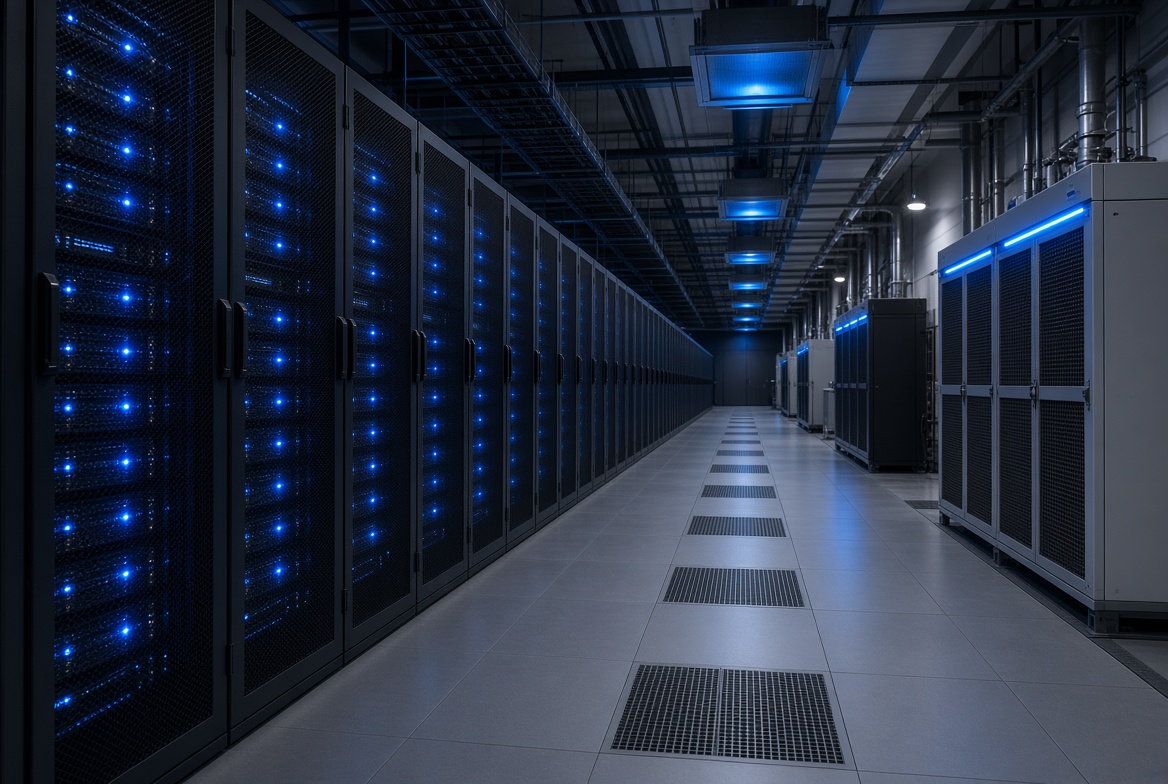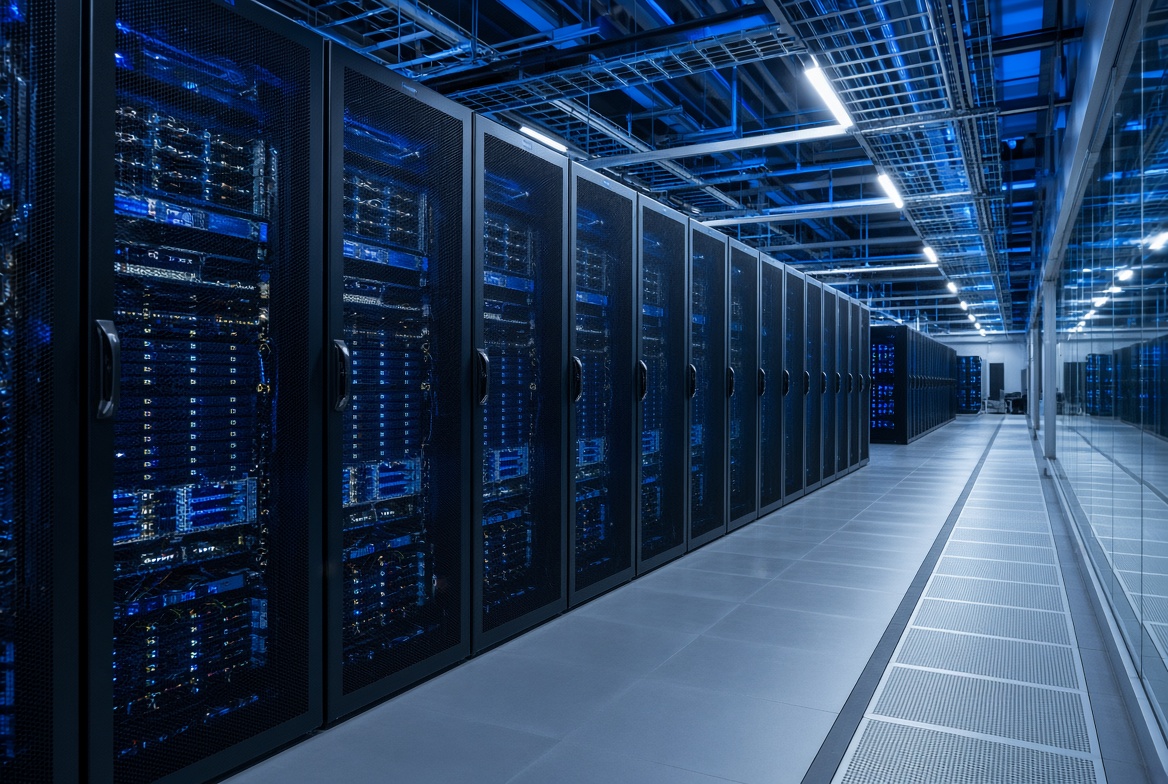
AI workloads are different from the usual web servers or databases most companies used to run. Training models or running inference often needs powerful GPUs that draw a lot of electricity and generate significant heat. That changes what a data center has to provide.
Many facilities that were built years ago for lighter loads now struggle when a single rack starts asking for 20 kW or more. Operators have to decide whether to spread the servers across many racks or find space that can actually support higher density.
What High-Density Actually Means
High-density usually means a rack that can safely handle more power and more heat than the average traditional rack. Instead of 5–8 kW, you might see designs that support 15–30 kW or even higher in purpose-built areas.
The cooling system has to match that. Air cooling alone sometimes is not enough when heat is concentrated. Some operators use rear-door heat exchangers or liquid cooling options. The power distribution also needs to be designed so that the circuits can deliver that much power without overheating or tripping.
Without the right design, you either cannot fill the rack fully or you risk hot spots that force servers to throttle or shut down.
Why AI Makes This More Urgent
A single AI server with multiple GPUs can easily consume several kilowatts by itself. When you put several of them in one rack, the numbers add up quickly. Companies that want to run AI close to their data or users prefer not to spread those servers across a large floor area if they can avoid it.
Spreading them out uses more space, more cross-connects, and can increase latency between nodes that need to talk to each other frequently. Keeping them denser is often more efficient, but only if the facility can support it.
Facilities that already hold Tier IV certification and sit close to major internet exchanges in Jakarta tend to make stable connectivity easier to maintain while still offering the power and cooling headroom these workloads need.
Practical Challenges Operators Face
Even if the design allows high density, daily operations change. Technicians have to be more careful when adding or removing equipment because the heat and power levels are higher. Monitoring becomes more important so that hot spots are caught early.
Power redundancy also needs to be thought through carefully. If a high-density rack loses one power feed, the remaining feed must be able to carry the full load. That requires proper planning of circuits and UPS capacity.
Many teams prefer colocation that also offers a disaster-recovery option in a different city so regional risks stay manageable, especially when the workloads themselves are expensive to rebuild.
What Companies Should Look For
Before placing AI equipment, ask the data center about the maximum power available per rack in the area you are considering. Also ask how the cooling is delivered and whether they have experience with similar loads.
Check whether the facility can grow with you. Starting with a few high-density racks is different from later needing an entire row. Locations near internet exchanges help keep the connection to users or other systems responsive.
When your workloads start moving toward AI or need higher power density per rack, a data center built for that load is simply more comfortable to run. You spend less time worrying about thermal limits and more time on the actual application.
Looking Ahead
As more organizations experiment with AI, the demand for high-density space will keep rising. Not every workload needs it, but the ones that do will look for facilities that already planned for it rather than trying to retrofit older halls.
Choosing a place that can handle both traditional and denser loads gives more flexibility. It also reduces the chance of having to move equipment later when the current facility cannot keep up.
The practical step is to map your expected power and cooling needs early, then match them with a facility that can support those numbers today and still have room to grow.