Imagine locking your office door with a key that is literally the number four. Anyone who guesses that number can walk in, look around, and maybe even change a few things without you noticing. That is roughly what happened with a set of digital certificates that many Java applications used to trust.
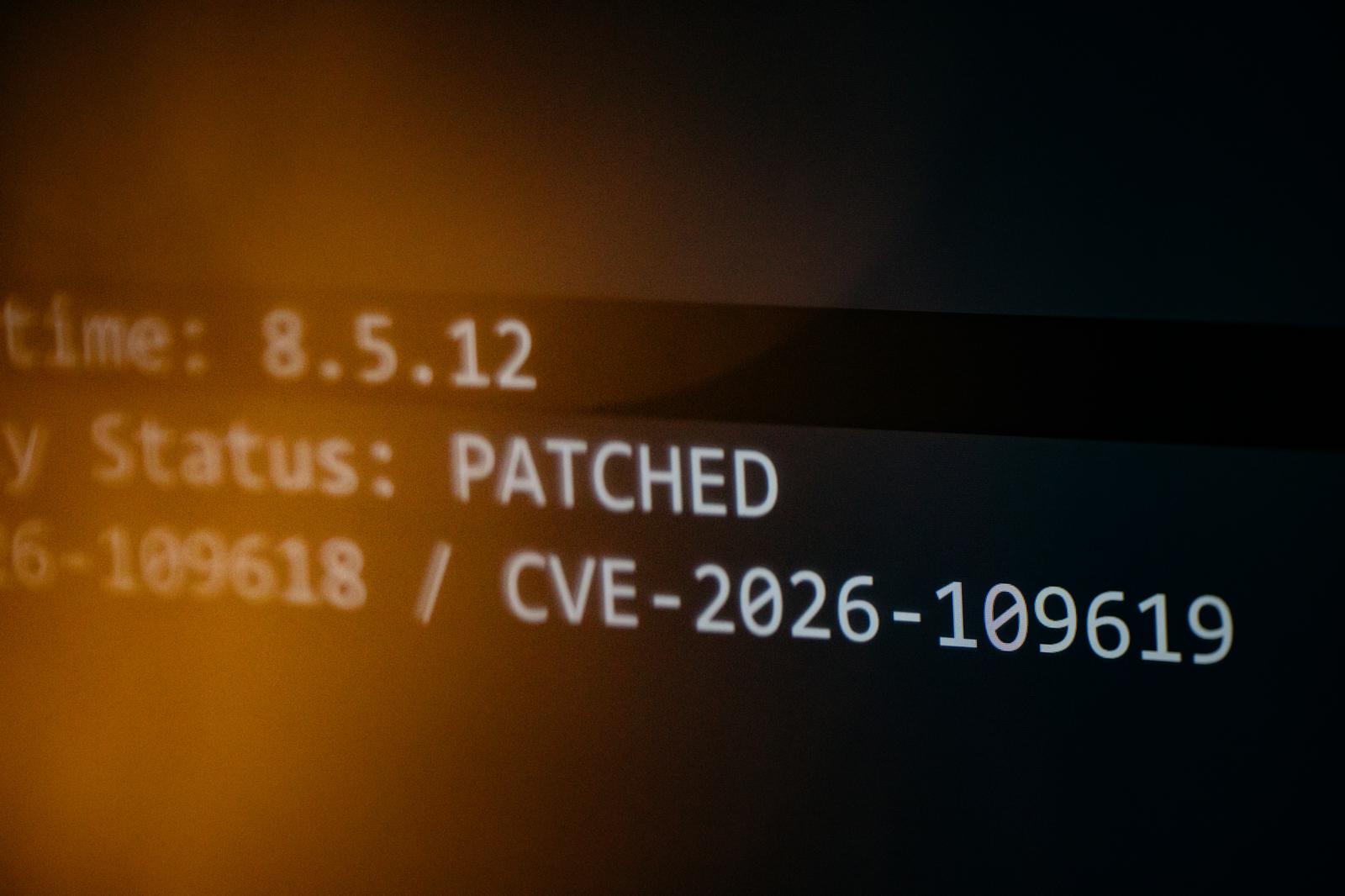
In late October 2026, Oracle released an urgent Security Alert for Java SE and GraalVM. The issue, tracked as CVE-2026-91403, carries a critical CVSS score of 9.1. It is not a complicated coding bug. It is simpler and, in some ways, more unsettling. Eight intermediate certificate authority certificates belonging to eMudhra had private keys so weak that researchers could recover them from public information. One of those keys was simply the number 4.
If a Java application still trusted those certificates, an attacker who possessed the weak keys could create fake certificates for almost any website or service. The application would accept the connection as genuine. Data could be read or modified in transit without raising an obvious alarm. The vulnerability is remotely exploitable and does not require any user credentials.
This kind of incident rarely stays inside the technical team. It eventually reaches the people who care about business continuity, customer trust, and the daily reliability of systems that keep the company running.
How a Key Generation Mistake Became a Network-Wide Problem
The story began in April 2025 during a key generation ceremony at eMudhra. A flaw in the process produced a second set of extremely weak keys alongside the intended strong ones. Those weak keys ended up in intermediate certificates that were later trusted by major systems, including Java’s default certificate store.
Browsers reacted quickly once the problem became public. Chrome, Firefox, Apple, and Microsoft blocked the affected chains within days. Java and several other runtimes, however, still carried the older trust store. That is why Oracle had to issue an out-of-band update instead of waiting for the next regular patch cycle.
For most businesses the practical question is straightforward: which of our systems still run an affected version of Java, and how quickly can we get them updated? The list of affected versions is fairly long and includes widely used releases of Java 8, 11, 17, 21, 25, and 27, plus related GraalVM builds. Older unsupported versions are also likely to be vulnerable.
The real-world risk is highest for applications that make outbound HTTPS connections—payment gateways, inventory systems, partner APIs, monitoring tools, or any service that validates the identity of the remote server. If that validation can be fooled, the integrity of the data flowing through the connection is no longer guaranteed.
Why This Matters Even If You Are Not a Java Expert
You do not need to understand certificate chains in detail to feel the impact. Many everyday business applications sit on top of Java. When those applications suddenly start rejecting legitimate connections or, worse, accept malicious ones, the problem surfaces as failed transactions, broken integrations, or quiet data exposure.
Teams that keep their environments current usually recover faster. Teams that still run older, unpatched runtimes often discover the issue only after something has already gone wrong. The difference is rarely about technical brilliance. It is more often about whether the underlying infrastructure makes regular updates practical.
A stable, well-managed environment reduces the friction of patching. When servers are easy to reach, when network paths remain reliable during maintenance windows, and when the people responsible for the systems can focus on the actual update instead of fighting connectivity or power issues, the whole process becomes less stressful.
Practical Steps That Reduce the Risk
The cleanest solution is to move to a patched Java version. Oracle and the OpenJDK community released updates that no longer trust the compromised intermediate certificates. Installing those builds and restarting the affected services closes the gap for most deployments.
Where an immediate full upgrade is difficult, temporary mitigations exist. Administrators can remove the specific weak roots and intermediates from the Java trust store using the keytool utility. Enabling certificate revocation checking also helps, because the compromised certificates were revoked by the issuer. These steps require care; removing the wrong certificate can break other legitimate connections.
After any change, it is wise to test the critical integrations again. Payment flows, partner APIs, and internal dashboards should be exercised to confirm that trust validation still works as expected and that no new errors have appeared.
None of these steps are glamorous. They are simply the ordinary work of keeping systems trustworthy. The organisations that treat this work as routine tend to experience fewer surprises.
How Reliable Connectivity and Managed Infrastructure Help
Security updates only succeed when the environment around them cooperates. A Java patch that cannot be downloaded because the internet link is unstable, or that cannot be applied because the server room is difficult to reach, remains an unfinished task.
Many companies find that a combination of dedicated internet access and professionally managed colocation makes the operational side of security easier. A dedicated connection keeps bandwidth consistent even when multiple systems are pulling updates or when traffic spikes during a maintenance window. Colocation in a proper data centre removes the need to worry about power, cooling, and physical access while the technical team focuses on the software itself.
Transtelekom offers both of these pieces. Dedicated Internet Access is designed to deliver steady performance with a clear service level agreement, so teams are not left guessing whether the link will hold during an important update. For organisations that prefer not to keep servers on their own premises, colocation services provide a controlled environment where power, cooling, and connectivity are already in place. Some customers combine the two: a dedicated fibre link into a colocation rack, giving them both reliable transport and a stable home for their systems.
The value is not that these services magically fix a certificate vulnerability. The value is that they reduce the number of extra obstacles between “we need to patch” and “the patch is live.” When the network stays quiet and the physical environment stays predictable, the security work itself becomes more manageable.
Facilities that already hold Tier certification and sit close to major internet exchanges in Jakarta tend to make stable connectivity and timely patching easier to maintain. When your Java workloads need a reliable home, colocation in a data center built for operational discipline simply reduces the extra friction.
Keeping the Bigger Picture in View
Incidents like CVE-2026-91403 are reminders that trust on the internet is built on many layers. Most of the time those layers work quietly in the background. Occasionally one of them fails, and the failure is simple enough that anyone can understand it: a private key that was never meant to be guessable turned out to be guessable.
The organisations that recover most smoothly are usually the ones that already treat updates as normal operational work rather than as emergencies. They have environments where patches can be tested and applied without drama. They have network paths that remain available when they are needed. And they have partners who understand that reliability is not only about speed, but also about making the ordinary tasks of security possible.
If your systems still run Java, the immediate next step is clear: check the versions, apply the available updates, and verify that the critical connections still behave correctly. Beyond that single fix, it is worth asking whether the surrounding infrastructure makes the next patch easier or harder. A stable dedicated connection and a well-run colocation environment will not eliminate every future vulnerability, but they will give your team a calmer place from which to respond.
Security work is never finished. The good news is that much of it becomes lighter when the foundation underneath is solid.