AI workloads have changed what many companies expect from their data centers. Training models or running inference at scale uses a lot more power per rack than traditional applications. Cooling also becomes harder because the heat is more concentrated.
That’s why facilities that were designed with higher redundancy and denser power delivery are getting more attention. Tier IV data centers are built so that almost any single failure can be handled without taking the whole site down. For AI teams that need long training runs, that stability matters a lot.
What Makes AI Demanding on Infrastructure
A single high-end GPU rack can draw several times the power of a normal server rack. When you put many of them together, the total load rises quickly. If the power distribution or cooling can’t keep up, you either throttle performance or risk equipment problems.
AI jobs also tend to run for hours or days. An unexpected power event or cooling glitch in the middle of a training run can waste a lot of compute time and money. That’s why operators look for sites that have multiple independent power paths and enough cooling capacity reserved for high-density rows.
Connectivity is another piece. Moving large datasets or serving model outputs needs reliable, low-latency links. Being close to major internet exchanges helps keep that part stable.
How Tier Standards Relate to AI Readiness
Tier III already gives concurrent maintainability, which means you can work on equipment without shutting the site down. Tier IV adds fault tolerance, so the facility can keep running even if one major component fails completely.
For AI, that extra layer is useful because the cost of an interruption is high. Many teams prefer to place their most intensive workloads in places that already have the power density and redundancy designed in, rather than trying to retrofit an older site.
Facilities that already hold Tier IV certification and sit close to major internet exchanges in Jakarta tend to make stable connectivity easier to maintain. When your workloads start moving toward AI or need higher power density per rack, a data center built for that load is simply more comfortable to run.
Cooling and Power Density in Practice
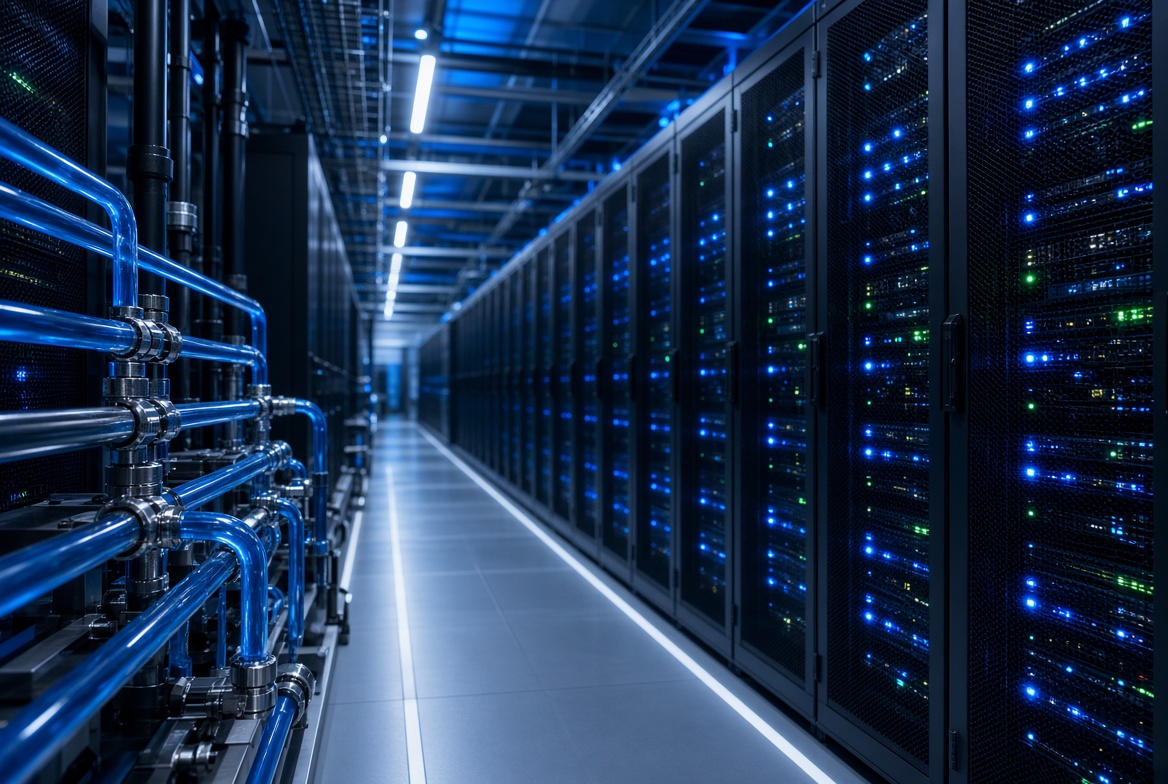
High-density racks need cooling that can handle localized heat. Traditional room-level cooling sometimes struggles when several hot racks sit next to each other. Newer designs use more targeted approaches, such as rear-door heat exchangers or carefully planned hot-aisle containment.
Power delivery also has to be robust. Dual utility feeds, large UPS systems, and generators that can support the full load for extended periods become more important. Operators usually want to see clear documentation of how the site handles a utility failure or a generator test.
Many companies also look for a disaster-recovery option in a different city so regional risks stay manageable. Having a second site ready reduces the worry that one location’s problem will stop the whole operation.
Choosing a Site for AI Workloads
When evaluating options, teams usually check three things first: available power per rack, proven cooling for dense loads, and the uptime history of the facility. Location relative to internet exchanges and the availability of cross-connects also come up quickly.
Support for remote hands is another practical point. AI clusters sometimes need hardware swaps or cable changes at odd hours. Knowing that someone on site can handle those tasks helps.
Many teams prefer colocation that also offers a disaster-recovery option in a different city so regional risks stay manageable. It lets them keep primary workloads close to users or data sources while still having a recovery path.
Looking Ahead
As more organizations experiment with larger models or real-time inference, the demand for high-density, highly available space will keep growing. Sites that already planned for those requirements usually need fewer workarounds.
The combination of strong power infrastructure, effective cooling, and good connectivity makes day-to-day operations smoother. Teams can focus more on the models and less on whether the facility can keep up.
Choosing a data center that matches the expected load from the start tends to reduce surprises later.