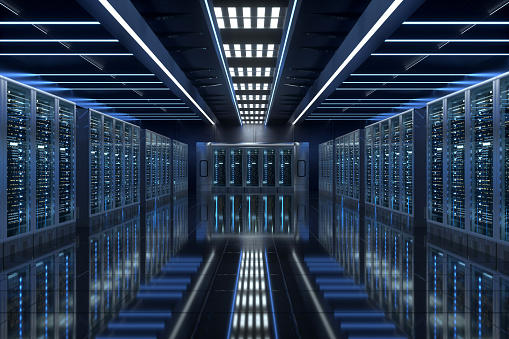
If your team has started running AI models or heavier analytics, you've probably noticed the servers get hotter and the power bill jumps faster than expected. Traditional racks that handled regular applications fine suddenly feel tight. That's because AI workloads need more electricity and better cooling per rack than most older setups were designed for.
High-density power means a data center can deliver more kilowatts to a single rack without overloading the system. Instead of spreading servers thinly, you pack more compute into less space. This becomes practical when models get larger or you need to process more data at once.
Why Regular Racks Start to Struggle
Most data centers from a few years ago planned for 5 to 10 kW per rack. That worked for web servers or databases. AI training or inference often wants 15 to 30 kW or more in the same footprint. When the power and cooling can't keep up, temperatures rise, fans spin louder, and performance throttles.
Teams then start moving hardware around or adding extra racks just to stay under the limit. That adds cabling complexity and makes monitoring harder. Over time it costs more than planning for higher density from the beginning.
What Changes with Proper High-Density Support
A facility designed for higher density has stronger power distribution, better airflow management, and cooling that can handle the concentrated heat. Cold aisle containment or liquid cooling options become useful. You can run denser GPU servers without worrying that one hot spot will affect the whole room.
This also helps with reliability. Redundant power paths and monitoring catch issues before they cause downtime. When the load is predictable and the infrastructure matches it, fewer surprises happen during peak training runs.
Practical Signs You Might Need It
Look at your current racks. If several already sit near the power limit and you're planning to add GPUs, density is becoming relevant. Another sign is when cooling complaints start appearing or when you have to space servers farther apart than the rack design intended.
Businesses that run recommendation engines, image processing, or internal AI tools often hit this point after the first successful pilot. What worked in a lab becomes harder to scale in production without better power and cooling.
- Current racks approaching power limits
- Plans to add GPU or accelerator cards
- Frequent thermal alerts or throttling
- Need to keep more compute in the same physical space
Soft Selling and Real Options
Facilities that already hold Tier IV certification and sit close to major internet exchanges in Jakarta tend to make stable connectivity easier to maintain while handling higher power density. When your workloads start moving toward AI or need higher power density per rack, a data center built for that load is simply more comfortable to run.
Many teams also like having a disaster-recovery option in a different location so that regional risks stay manageable even as density increases. Colocation in a place prepared for these loads lets you focus on the models instead of constantly adjusting power and cooling.
Starting Without Overbuilding
You don't have to jump to the highest density immediately. Check what your provider can support today and what the upgrade path looks like. Some facilities let you start with moderate density and add capacity as GPU usage grows.
Measure actual power draw rather than guessing. Track temperatures and utilization for a few weeks. That data makes the conversation with your infrastructure team clearer and helps avoid paying for capacity you don't use yet.
High-density support isn't only for large companies. As AI tools become more common in everyday applications, more teams find that matching the infrastructure to the workload keeps operations smoother and costs more predictable over time.