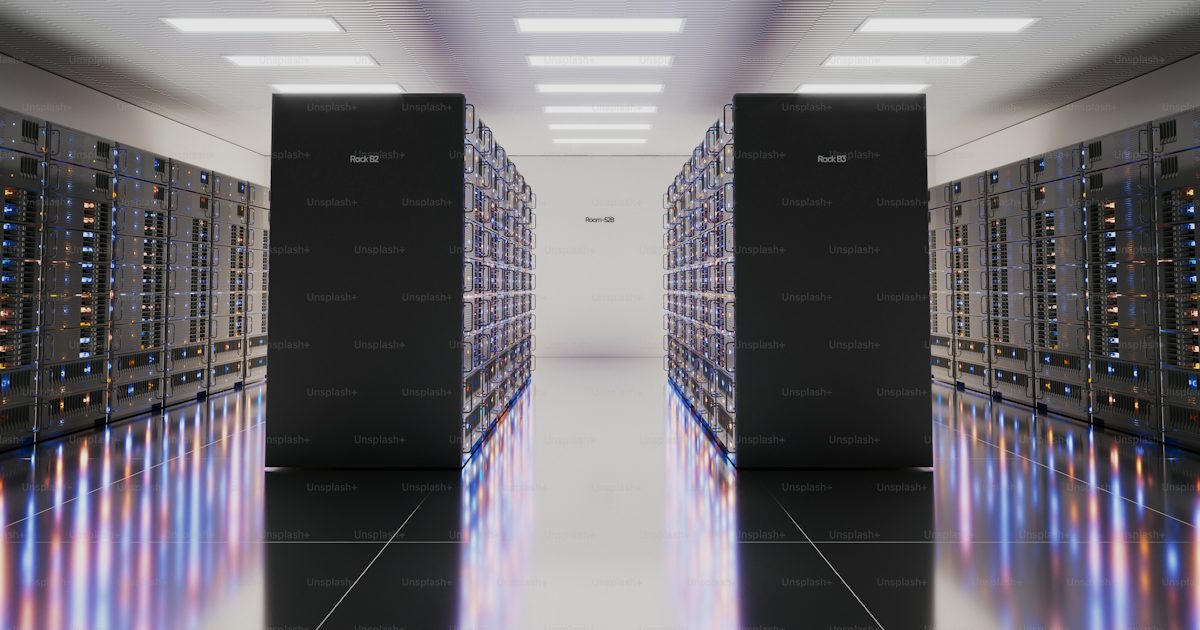
AI workloads are different from regular web servers. They need a lot of power in a small space, and they generate a lot of heat. If the power or cooling hiccups even for a short time, training jobs can fail or inference latency can spike.
That’s why many teams start looking at data centers that are built for higher density and higher reliability. Tier IV facilities are designed so that a single failure or planned maintenance does not interrupt the equipment. For AI, that difference matters.
What makes AI workloads harder on infrastructure?
A typical web server might draw a few hundred watts. An AI training rack with multiple GPUs can easily pull several kilowatts. Some high-density setups go even higher. That means the power distribution and cooling systems must be ready for concentrated heat and steady high draw.
If the cooling cannot keep up, temperatures rise, GPUs throttle, and jobs slow down or stop. If power is interrupted, the whole training run can be lost. Restarting from a checkpoint takes time and money.
Regular Tier III facilities can handle many enterprise loads, but when power density per rack climbs, the margin becomes tighter. Tier IV designs usually have more redundant paths for both power and cooling, so the facility can stay online even if one path has a problem.
How Tier IV helps in practice
In a Tier IV data center, every critical system has a fault-tolerant design. Power comes from multiple independent paths. Cooling is also redundant. If one UPS or one cooling unit fails, the others continue without dropping the load.
For AI teams, this means fewer unexpected interruptions. You can schedule maintenance without taking the racks offline. You can also run denser racks because the facility was built to support higher power per cabinet.
Facilities that already hold Tier IV certification and sit close to major internet exchanges in Jakarta tend to make stable connectivity easier to maintain. Low latency to the exchange helps when you need to move data in or serve inference results quickly.
Many teams also like having a disaster-recovery option in a different city. A Tier III DRC in Bali, for example, can keep a copy of critical models or data far enough away that a regional event in Jakarta does not affect both sites at once.
What to check when choosing a facility for AI
Ask about the available power per rack and whether the facility can support higher density without custom work. Check the cooling method — some use in-row or rear-door cooling for hot racks.
Look at the SLA and what it actually covers. A high SLA number is useful, but understand what happens during maintenance and how quickly remote hands can respond if a GPU fails.
Also check connectivity options. Direct links to internet exchanges and major cloud providers reduce the time spent moving large datasets. For inference workloads that serve users in Indonesia, proximity to the exchange keeps latency lower.
When your workloads start moving toward AI or need higher power density per rack, a data center built for that load is simply more comfortable to run. You spend less time fighting infrastructure limits and more time improving the models.
Conclusion
AI does not only need good algorithms and data. It needs infrastructure that can deliver steady power and cooling at higher density. Tier IV facilities are designed for that level of resilience.
If you are planning AI projects, looking at a Tier IV colocation option near the main internet exchanges can reduce operational surprises. Combined with a remote recovery site, it gives a practical way to keep workloads running even when something goes wrong.
The goal is simple: let the facility handle the hard part of uptime and density, so your team can focus on the AI work itself.
Another practical point is power quality. AI hardware is sensitive to voltage fluctuations. A facility with dual independent power sources and proper UPS configuration keeps the voltage stable even when the utility has small issues. This reduces the chance of random GPU errors that are hard to debug.
Cooling is equally important. High-density racks create hot spots. Good Tier IV designs plan the airflow so that hot air does not recirculate. Some facilities offer liquid cooling options or higher chilled-water capacity for the densest deployments. Asking about the maximum kW per rack and the available cooling margin helps you plan before you move equipment in.
Connectivity also plays a role. Training often involves moving large datasets. Inference needs low and consistent latency. Being close to the main internet exchanges in Jakarta means fewer hops and more predictable performance. You can also arrange cross-connects to other providers or cloud on-ramps without going through the public internet.
For teams that already have some on-premise GPUs, a hybrid approach is common. Keep the most sensitive training in a controlled Tier IV environment and use public cloud for burst capacity. The data center becomes the reliable base, while the cloud handles temporary spikes.
Many companies that start with AI experiments later move production workloads into colocation because the cost and control become clearer. You pay for the space and power you use, and you keep ownership of the hardware. When density needs increase, you can add more racks or upgrade power circuits without rebuilding the whole facility.
Facilities that already hold Tier IV certification and sit close to major internet exchanges in Jakarta tend to make these transitions smoother. The combination of high reliability, good connectivity, and available power density reduces the operational friction that often slows AI projects.