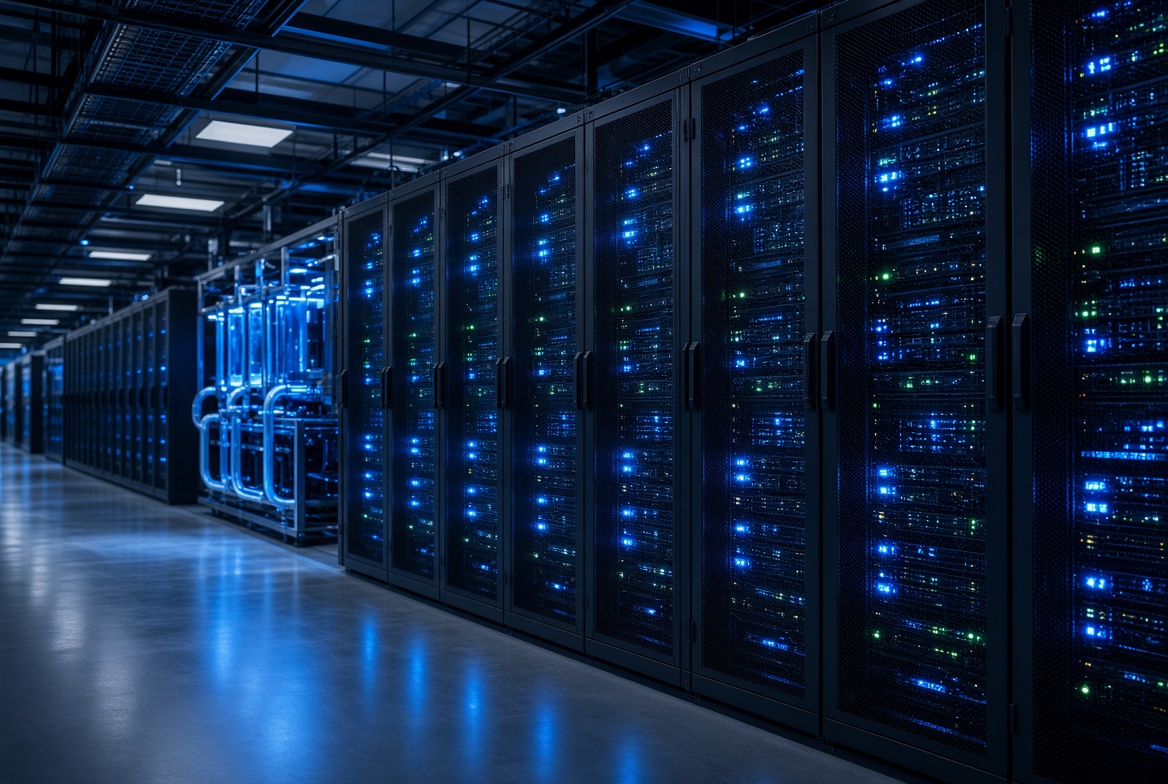
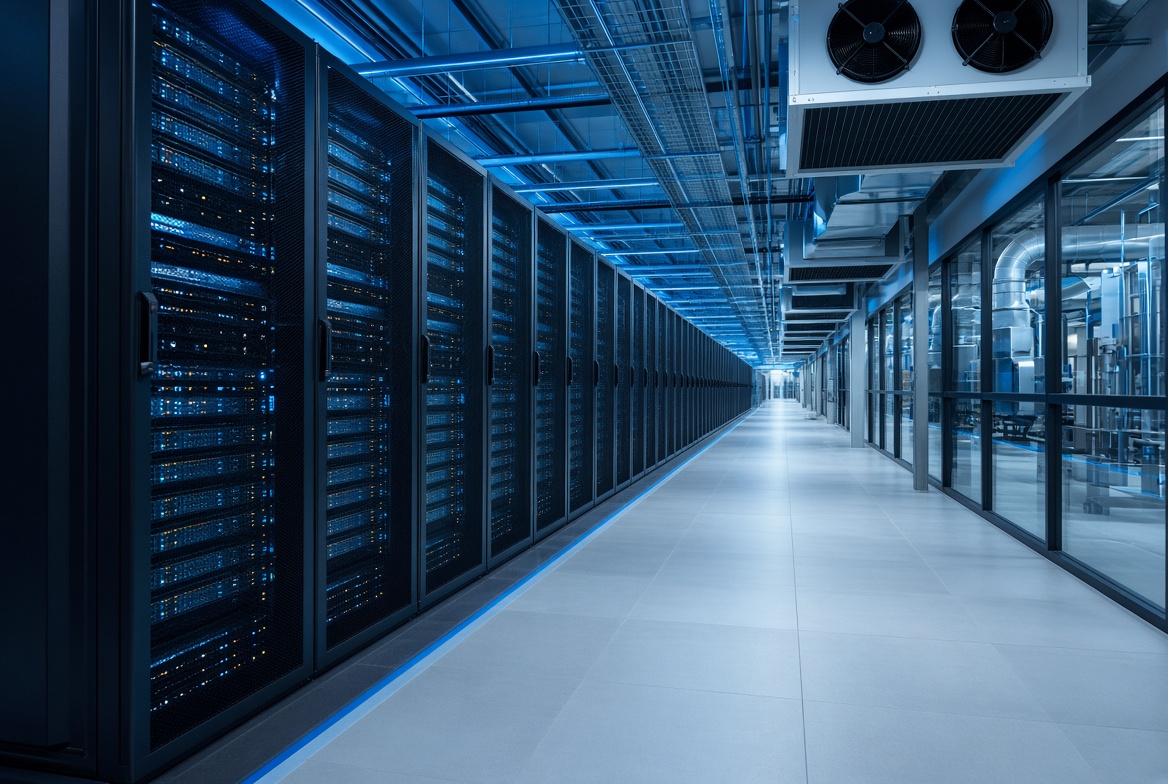
AI workloads have changed what many teams expect from a data center. A few years ago a standard rack with 5–10 kW was common. Now training or inference clusters can push 20 kW, 40 kW, or even higher per rack. The heat and power demand rise together, and not every facility was designed for that.
If the power distribution or cooling cannot keep up, the servers throttle, jobs take longer, or worse, equipment is at risk. That is why more companies are looking at data centers that were built with high-density racks in mind from the start.
What Changes with AI Density
Traditional cooling often relies on raised floors and perimeter CRAC units. At lower densities this works. Once you pass a certain kW per rack, the hot air is harder to capture and the cold air does not reach the servers evenly. Hot spots appear, and the whole room efficiency drops.
High-density designs usually use closer containment, rear-door heat exchangers, or liquid-assisted cooling options. Power is also delivered with more busway or higher-capacity PDUs so you do not run out of circuits in the middle of a rack.
The difference is felt day to day. Jobs finish on schedule more often, and the operations team spends less time chasing thermal alarms.
Reliability Still Matters More Than Raw Density
High density without reliability is risky. A short power blip or cooling failure at 40 kW per rack creates bigger problems than the same event at 8 kW. That is why facilities that already hold Tier IV certification tend to be more comfortable for AI workloads. The redundancy is built so that maintenance or a single failure does not take the load offline.
Location also helps. When the data center sits close to major internet exchanges in Jakarta, the latency for data movement between clusters or to users stays lower. Many teams prefer this combination: high-density capacity plus Tier IV and good connectivity.
Facilities that already hold Tier IV certification and sit close to major internet exchanges in Jakarta tend to make stable connectivity easier to maintain while handling the extra power and heat from AI racks.
Practical Signs Your Current Facility May Struggle
You start seeing frequent thermal alarms even after airflow adjustments. Power circuits fill up before the rack is full of servers. Adding one more GPU server requires a long lead time because the room needs upgrades. These are common signals that the facility was not sized for the new density.
Some teams move the heaviest training jobs to a colocation site that was designed for it, while keeping lighter inference or storage closer to users. Others plan a gradual migration as contracts allow.
Looking Ahead
AI density is not going back down. New chips and denser packaging will keep pushing the numbers. Data centers that can accept higher kW per rack today, with clear upgrade paths and solid redundancy, give teams more room to grow without constant infrastructure surprises.
When your workloads start moving toward AI or need higher power density per rack, a data center built for that load is simply more comfortable to run. Many also keep a disaster-recovery option in a different city so regional risks stay manageable.
The goal is not the highest density number on paper. It is having enough headroom in power, cooling, and connectivity so the AI work can continue without the infrastructure becoming the bottleneck.