More companies in Indonesia are experimenting with AI, from simple chatbots for customer service to larger models for data analysis. These workloads do not behave like ordinary web servers. They pull a lot of electricity and generate significant heat in a small space. That is why high-density racks are moving from nice-to-have to almost necessary.
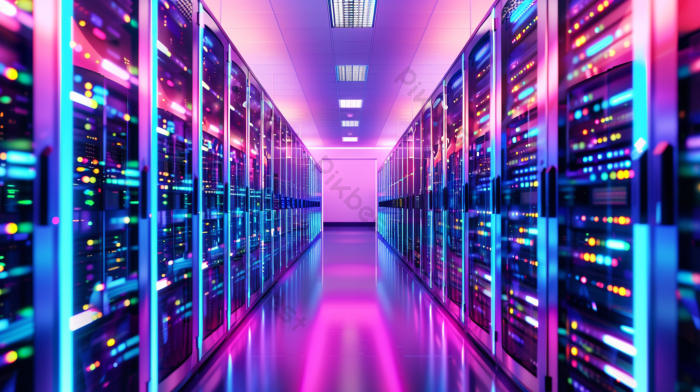
A traditional rack might run at 5-10 kW. An AI training cluster can easily ask for 20-40 kW or more in the same footprint. If the data center was not built for that, the power feeds and cooling cannot keep up. The result is throttling, higher failure rates, or the need to spread equipment across many more racks, which wastes space and money.
What Makes a Rack High-Density
High-density does not only mean packing more servers. It means the whole stack is designed for higher power and better heat removal. Power distribution units (PDUs) can deliver more amperage. Cooling moves from basic room-level air conditioning toward more targeted approaches such as in-row coolers, rear-door heat exchangers, or even liquid cooling for the hottest equipment.
Floor loading, cabling pathways, and even the raised floor or slab strength also matter. When each rack weighs more and pulls more power, the facility has to support that without hotspots or structural issues. Operators who planned for this from the beginning find day-to-day running much smoother.
Facilities that already hold Tier IV certification and sit close to major internet exchanges in Jakarta tend to make stable connectivity easier to maintain while handling these denser loads.
Why This Matters More in Indonesia Right Now
Indonesia’s digital economy is growing fast, and AI is part of that growth. Banks, logistics companies, and large retailers are testing AI for forecasting, fraud detection, and personalization. Many of them prefer to keep sensitive data inside the country, so local data centers that can host these workloads become attractive.
At the same time, power costs and grid reliability vary by location. A data center that can deliver consistent high power density without frequent brownouts or expensive workarounds saves money over the long term. Cooling is equally important because tropical temperatures make traditional air cooling less efficient once densities rise.
Teams that have tried to force AI hardware into older colocation spaces often end up with higher operating costs or performance limits. Starting with a facility that already supports higher density avoids those surprises.
Practical Considerations When Choosing Capacity
Before moving AI workloads, check the actual power available per rack and the cooling method. Ask for the maximum sustained kW the facility can deliver, not just the nameplate rating. Also ask how they handle heat rejection and whether liquid-cooling readiness is available if you need it later.
Connectivity still matters. Even if the compute is dense, the data has to move in and out. Proximity to internet exchanges reduces latency for applications that serve users across Indonesia or that pull training data from multiple sources.
Many teams prefer colocation that also offers a disaster-recovery option in a different city so regional risks stay manageable. When workloads become critical, having a second site that can take over reduces pressure on the primary location.
Looking Ahead
As AI models continue to grow, power densities are unlikely to go back down. Data centers that can support 30 kW+ per rack today will be better positioned for the next few years. Those that cannot will either limit what customers can run or require costly retrofits.
When your workloads start moving toward AI or need higher power density per rack, a data center built for that load is simply more comfortable to run. The difference shows up in uptime, energy efficiency, and how quickly you can expand capacity.
Indonesia Super Corridor facilities, with Tier IV design and locations near major exchanges, are already seeing more interest from teams that want to run denser AI workloads without constant infrastructure worries. The combination of reliability, power readiness, and connectivity makes the transition smoother.
Choosing the right environment early means less firefighting later. High-density capability is no longer only for hyperscalers; it is becoming a practical requirement for any organization that wants to use AI seriously.